Polyhouse Construction
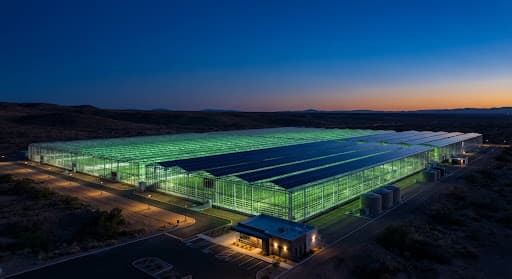
State-of-the-art climate-controlled structures engineered for maximum durability and environmental efficiency.
Grade-A Steel Infrastructure
Automated Ventilation Systems
Trusted by Global Agricultural Leaders
We provide an end-to-end ecosystem that combines physical infrastructure with digital intelligence to maximize your agricultural potential.
State-of-the-art climate-controlled structures engineered for maximum durability and environmental efficiency.
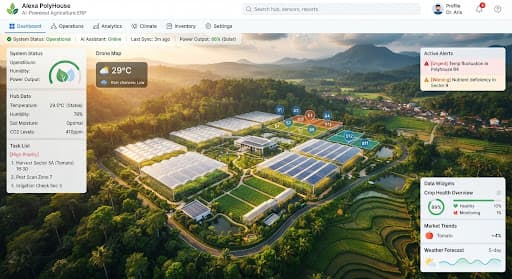
A unified dashboard for managing labor, inventory, distribution, and financial health of your agribusiness.
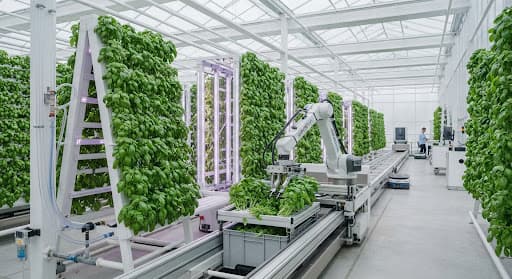
Advanced computer vision and machine learning algorithms that monitor crop health and automate decision making.
See how Alexa PolyHouse AI accompanies your crops from seed to harvest through continuous autonomous monitoring.
AI cameras detect the exact moment of germination across thousands of saplings, flagging low-viability windows instantly.
AI cameras detect the exact moment of germination across thousands of saplings, flagging low-viability windows instantly.
Real-time sensor data adjust humidity and UV exposure per square meter to optimize vegetative growth speeds.
Neural networks identify microscopic early signs of mildew or aphid infestations before they become outbreaks.
Neural networks identify microscopic early signs of mildew or aphid infestations before they become outbreaks.
Our Work
Explore our growing network of intelligent agricultural installations built for measurable productivity and sustainable growth.
Our Global Footprint
Precision agriculture technology creating measurable impact for farms, businesses, and communities around the world.
Intelligent agricultural infrastructure deployed across growing farming regions.
Agricultural operations connected through modern precision farming technology.
Farmers and communities benefiting from more productive and sustainable agriculture.
Crop Intelligence
Monitor crop health, growth progress, and expected yield with intelligent profiles built from real-time agricultural data.
Solanum lycopersicum
Expected Yield
4.2 Tons
Growth Progress
72%
Capsicum annuum
Expected Yield
3.8 Tons
Growth Progress
68%
Cucumis sativus
Expected Yield
3.1 Tons
Growth Progress
61%
"The transition to Alexa PolyHouse was the smartest investment our cooperative ever made. We increased our export capacity by 40% in just six months."

CEO, Thorne Agri-Enterprises
"The AI detection system caught a blight outbreak 3 days before it was visible to the human eye. It literally saved our entire winter harvest."

Production Lead, TerraFlow NL
"Sustainability is no longer a buzzword for us—it's measurable. We've reduced our water footprint by 80% while doubling our output."

Founder, GreenScale Asia
The Future Starts Here
Join 500+ enterprises worldwide using Alexa PolyHouse to lead the agricultural revolution. Your precision future starts with a single conversation.